Mark of the Moleskine
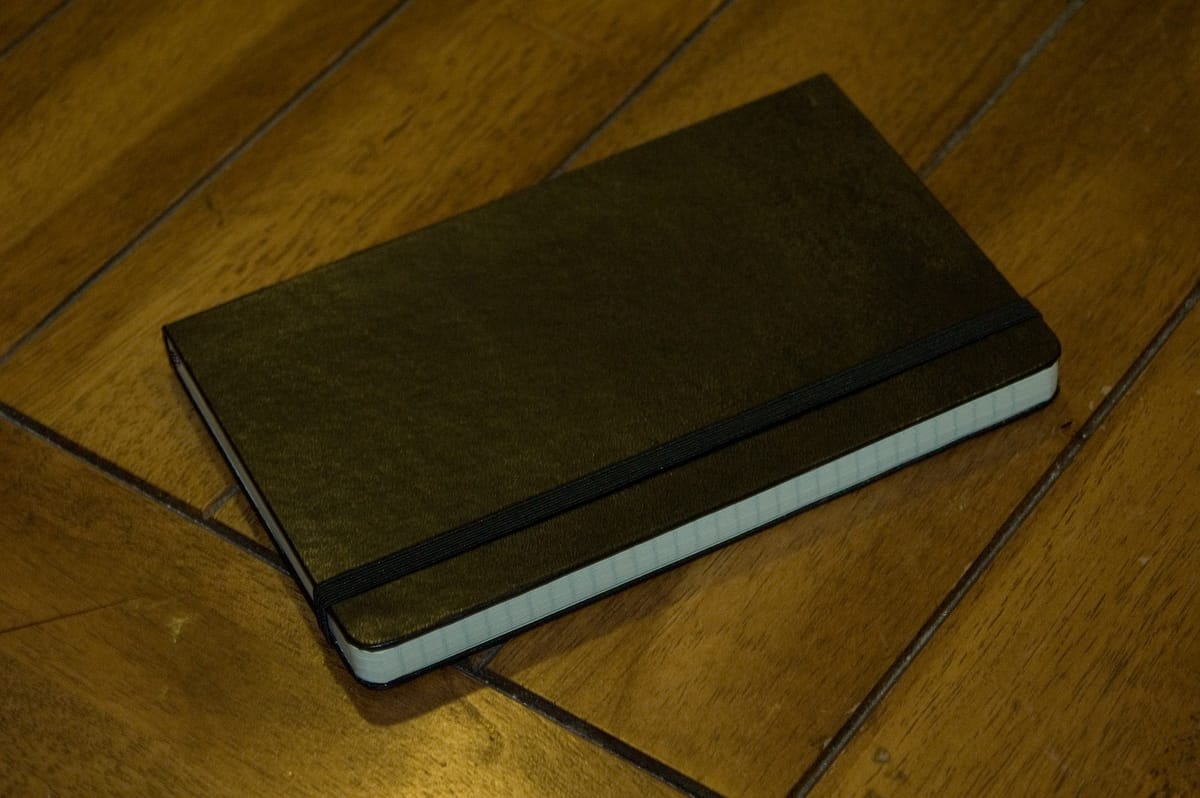
Okay, I can see the appeal. I’m not sure that I’m ready to join the Moleskine faithful, but these notebooks are pretty cool. I like the covers, the closure bands are a feature I appreciate, the end papers are classy and the pocket in the back is darn handy.
Even the paper-covered cahiers are pretty cool. No band, and certainly not as durable, but nice. The paper is stitched into the cover in a single signature, and the perforated pages in the back is a very nice touch. I don’t like notebooks with perforated pages; after you remove enough pages, it gets a gap-toothed appearance. I generally just don’t like tearing pages out of notebooks. But then I’ve been in situations where someone asks for a piece of paper, and there I am with five notebooks full of paper and none of it’s perfed or otherwise ready for clean and easy removal. Twenty perfed pages in the back of the cahier is a very nice compromise. Easy removal, but the pages all come out from the same place and the whole thing doesn’t have to be perfed.
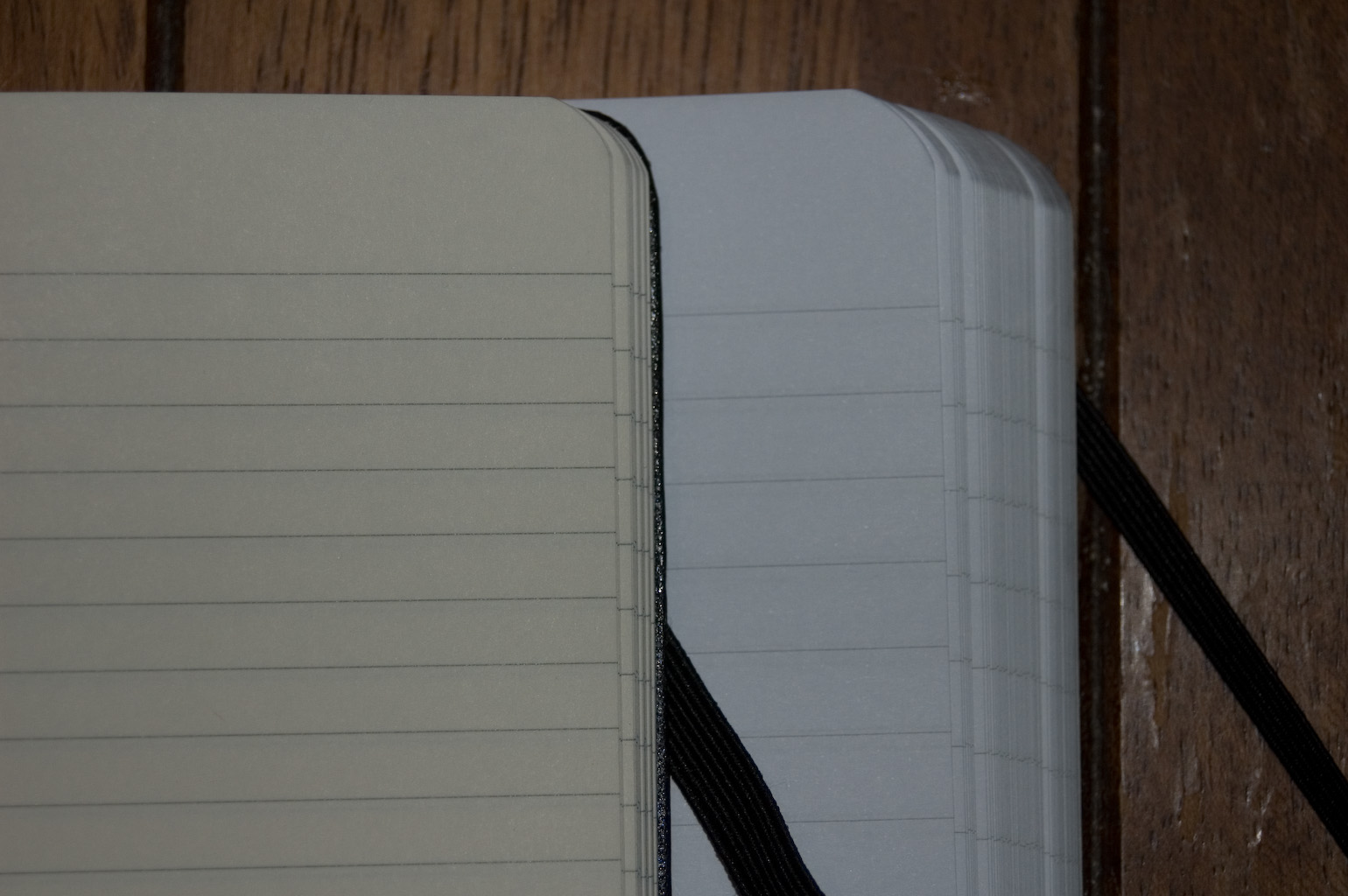
I think the design is spot-on. The paper is a pleasing off-white color, not quite as yellow as a legal pad, with grey rules. I prefer a brighter white for a sketchbook, but this is very nice for a journal or a composition book. In comparison to every other notebook I’ve put my hands on recently, the Moleskines are ruled very close. It’s wonderful for the truly fine point of my Parker ’51â or for a modern extra-fine; I don’t think anyone could write with a medium or broad nib in a ruled Moleskine.
So as an object of art, the Moleskine notebook takes the prize. Its æsthetic appeal doesn’t seem to have a rival. The features are not overly clever; the whole line has been well thought out.
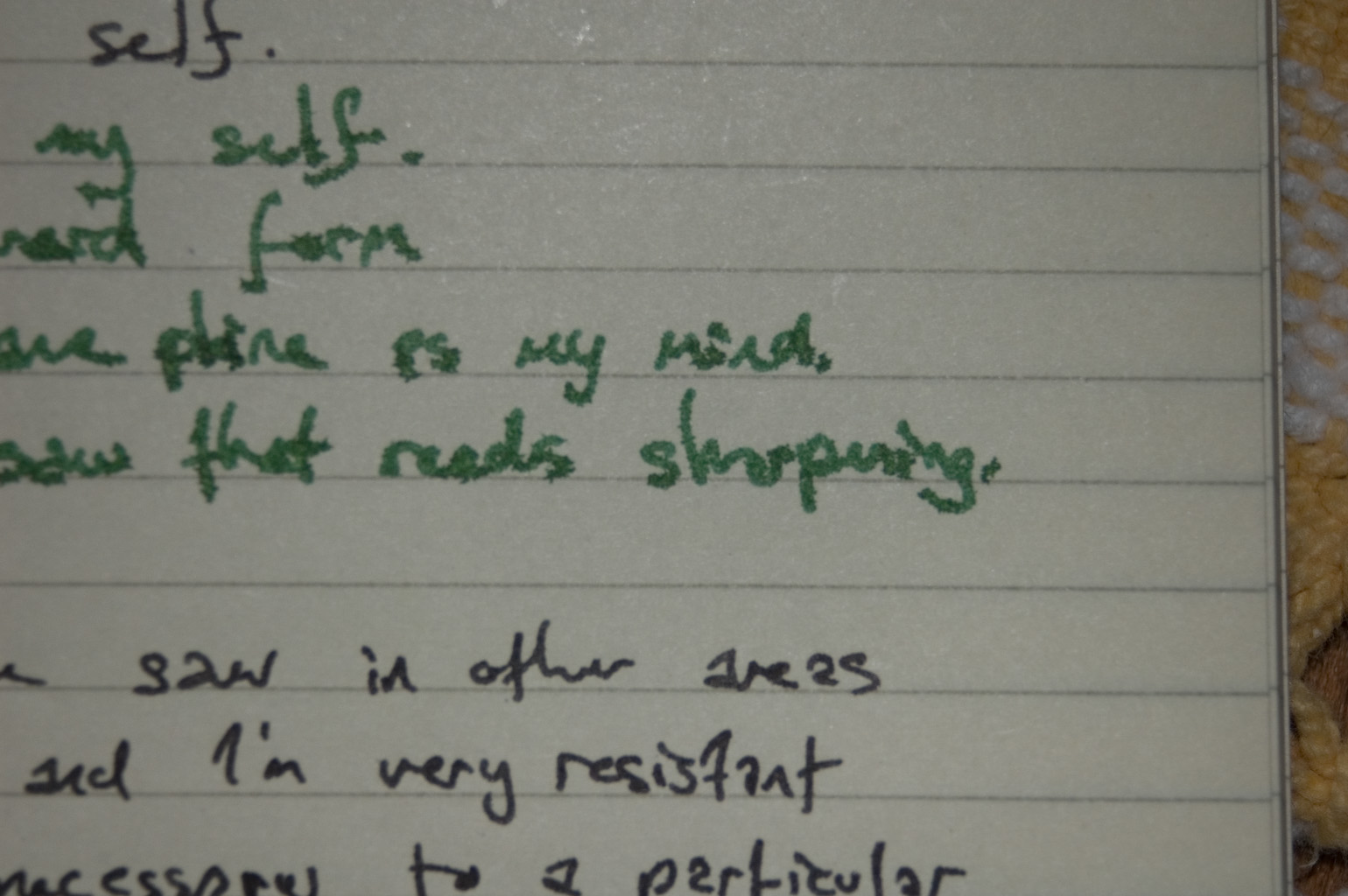
My gripe is that the paper, while smooth and subtly textured, is a bit thin and porous. I’ll grant that my Noodler’s ink is a tough test for any paper, but the Moleskine paper shows the writing on the opposite side of the page too much to allow the use of the reverse of each page when I write with my Rotring Initial (fine point) loaded with Noodler’s Hunter Green. The green bleeds visibly away from the line as though I were writing on newsprint. The Parker ’51, which I believe has Private Reserve Black in it, does not exhibit these problems on the Moleskine paper. Neither does the Pilot Knight, filled with Aurora Black. The Noodler’s Polar Black in my Rotring 700 also bleeds like the dickens on Moleskine paper.
Excessive bleeding is not an acceptable situation, but it seems I can avoid it by not using Noodler’s inks. So do I change ink for paper’s sake or paper for ink’s sake? Not a question I’m prepared to answer quite yet, but any of my dear readers who may be considering an ink or a notebook should be aware of their properties.
The last issue I have with the Moleskine notebooks is that they are «Printed and bound in China – Designed and assembled in Italy». I’m curious whether the paper is milled in China as well. In any case, although the US has «normal trade relations» (what used to be called «Most Favored Nation») with China, as someone who values freedom and human dignity I have trouble sending my money to China. These are premium notebooks; couldn’t they have gotten the paper made in a country without a record of worker abuse? There are lots of great features to the notebooks, but at these prices why would they have to ship the work off to China? It is a real misgiving I have about adopting Moleskine as my new notebook of choice. However, in order to test out the notebooks I’ve bought several of them, so it’ll be some time before I have to face this choice again.
At Arch Supplies today I noticed that one of the Moleskines they had on the shelf had an older label, one that didn’t have «printed and bound in China» on it. It may be worth the price of another one of these spendy Moleskines to find out if there has been any change in the quality of the paper since they started getting it from China.